

 Türkçe
How Does an AI Chatbot Learn About a Company's Website?
An AI chatbot learns website content through an end-to-end framework called Retrieval-Augmented Generation (RAG), which combines automated DOM crawling, vector indexing, context retrieval, and grounded response generation.
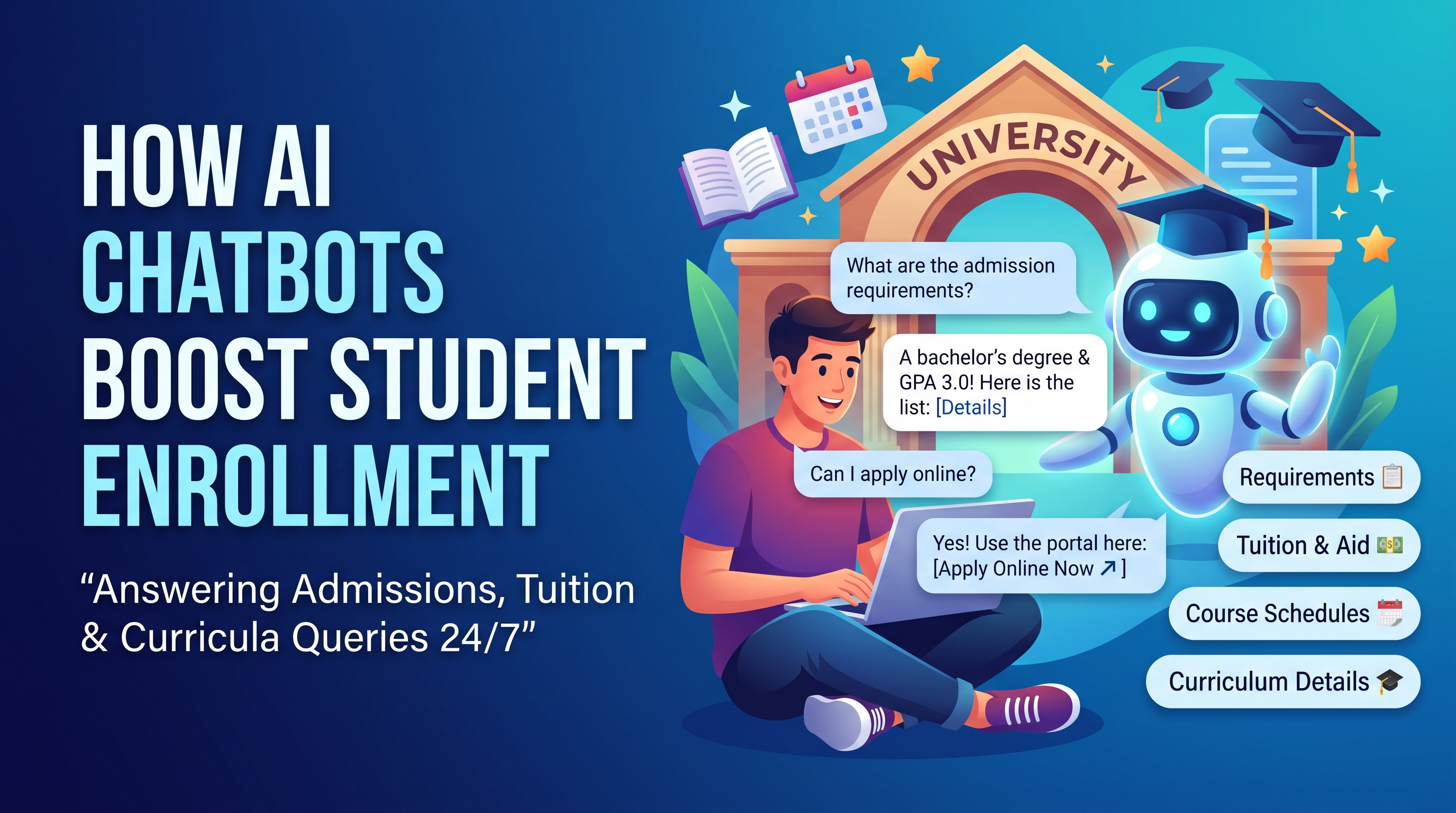
An AI chatbot learns website content through an end-to-end framework called Retrieval-Augmented Generation (RAG), which combines automated DOM crawling, vector indexing, context retrieval, and grounded response generation.
1. The 4-Step Learning and Response Pipeline
Instead of relying on tedious manual flowchart building, AI chatbots ingest and process website data through four continuous stages:
- 1. Content Crawling & DOM Parsing: The chatbot ingests public URLs, HTML structures, and textual content across the site. Product tables, service descriptions, support guides, and FAQs are parsed into structured text.
- 2. Vector Knowledge Base Indexing: Ingested text is divided into semantically coherent "chunks" and converted into vector embeddings. These embeddings form a high-speed vector index optimized for semantic lookup.
- 3. Context Retrieval: When a user poses a question, the AI evaluates the semantic intent behind the query rather than exact keyword matching. It instantly retrieves the most relevant knowledge chunks from the vector database.
- 4. Grounded Response Generation: The language model synthesizes the retrieved factual snippets into a clear, natural language answer tailored directly to the user's specific context.
2. Why Do Inaccurate or Missing Answers Occur?
While modern AI architectures offer high accuracy, response discrepancies can stem from specific data and system limitations:
- Undocumented Website Information: If a query targets information not explicitly detailed anywhere on the website (e.g., custom pricing or unlisted specs), the AI cannot retrieve the facts.
- Contradictory or Unstructured Copy: Conflicting data across different landing pages (e.g., different refund windows mentioned on two separate pages) can confuse the retrieval step.
- Outdated Vector Index: When site updates occur but the AI agent has not executed a fresh re-crawl, the system may present legacy information.
- Model Hallucinations: If strict RAG architectural guardrails are lacking, the underlying LLM might attempt to fill knowledge gaps by generating plausible-sounding but fabricated details.
Comments
0No approved comments yet.